
Road signs
259 signs in 5 groups, each with a picture and its meaning. Tap a group name to expand or collapse it.
Prohibitory signs61 signs
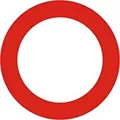
P.101: Road closed
Closed to all vehicles in both directions, except priority vehicles as defined by law.
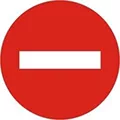
P.102: No entry
No vehicle may enter in the direction the sign faces.
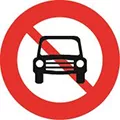
P.103a: No cars
No motor vehicles, including three-wheeled motorcycles with a cargo box. Two-wheeled motorcycles, mopeds (including electric ones) and priority vehicles under the Road Traffic Law are exempt.
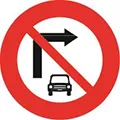
P.103b: No right turn for cars
Cars (and three-wheeled motorcycles) must not turn right, except priority vehicles under the Road Traffic Law.
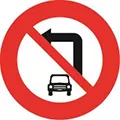
P.103c: No left turn for cars
Cars must not turn left or make a U-turn, except priority vehicles under the Road Traffic Law.
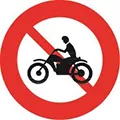
P.104: No motorcycles
No motorcycles of any kind, except priority motorcycles under the Road Traffic Law.
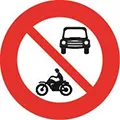
P.105: No cars or motorcycles
No motor vehicles or motorcycles, except mopeds and priority vehicles under the Road Traffic Law.
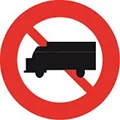
P.106a: No lorries
No lorries of any kind, except priority vehicles under the Road Traffic Law. The ban also covers tractors and special-purpose machinery.
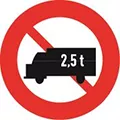
P.106b: No lorries over the weight shown
The weight is given in tonnes on the sign. Lorries whose payload exceeds the figure shown must not pass.
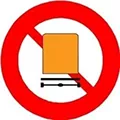
P.106c: No lorries carrying dangerous goods
Sign P.106c: no lorries carrying dangerous goods.
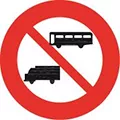
P.107: No coaches or lorries
No coaches or lorries, including tractors and special-purpose machinery, except priority vehicles under the Road Traffic Law.
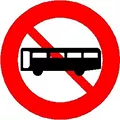
P.107a: No coaches
No passenger coaches, except priority vehicles as prescribed. This sign does not ban buses.
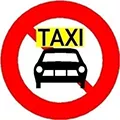
P.107b: No taxis
No taxis. Where taxis are banned only at certain hours, a supplementary plate shows those hours.
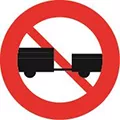
P.108: No vehicles towing trailers
No motor vehicles towing a trailer, including motorcycles, tractors and coaches with trailers. Semi-trailer lorries and priority vehicles under the Road Traffic Law (towing a trailer) are exempt.
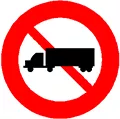
P.108a: No semi-trailers
No semi-trailers or vehicles towing trailers, except priority vehicles (semi-trailers or vehicles towing a trailer) as prescribed.
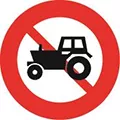
P.109: No tractors
No tractors of any kind, whether wheeled or tracked.
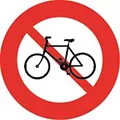
P.110a: No bicycles
No cycling. The sign does not apply to people pushing a bicycle.
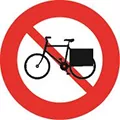
P.110b: No cargo bicycles
No cargo bicycles. The sign does not apply to people pushing one.
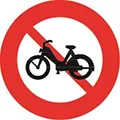
P.111a: No mopeds
No mopeds. The sign does not apply to bicycles.
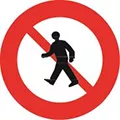
P.112: No pedestrians
Pedestrians must not use this road.
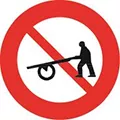
P.113: No handcarts
No hand-pulled or hand-pushed carts. The sign does not apply to prams or to mobility vehicles for disabled people.
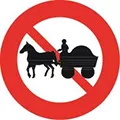
P.114: No animal-drawn vehicles
No animals carrying goods or passengers, whether pulling a cart or carrying a load on their backs.
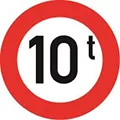
P.115: Weight limit
No vehicle, including priority vehicles under the Road Traffic Law, whose total weight (vehicle and load) exceeds the figure shown in tonnes.
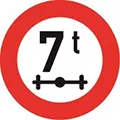
P.116: Axle weight limit
No vehicle, including priority vehicles under the Road Traffic Law, whose weight (vehicle and load) on any one axle exceeds the figure shown in tonnes.
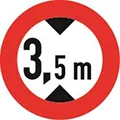
P.117: Height limit
No vehicle, including priority vehicles under the Road Traffic Law, whose height (to the highest point of vehicle and load) exceeds the figure shown in metres.
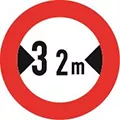
P.118: Width limit
No vehicle, including priority vehicles under the Road Traffic Law, whose width (vehicle and load) exceeds the figure shown in metres.
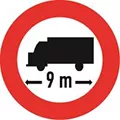
P.119: Length limit
No vehicle (motorised or non-motorised), including priority vehicles under the Road Traffic Law, whose overall length (vehicle and load) exceeds the figure shown in metres.
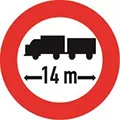
P.120: Length limit for vehicles with trailers
No vehicle towing a trailer, including semi-trailer lorries and priority vehicles under the Road Traffic Law, whose overall length (vehicle, trailer and load) exceeds the figure shown.
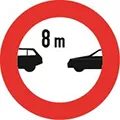
P.121: Minimum distance between vehicles
Cars must keep a minimum gap. They must not follow each other closer than the distance shown in metres; this includes priority vehicles under the Road Traffic Law.
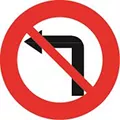
P.123a: No left turn
No vehicle (motorised or non-motorised) may turn left, except priority vehicles under the Road Traffic Law. The sign does not ban U-turns.
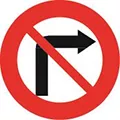
P.123b: No right turn
No vehicle (motorised or non-motorised) may turn right, except priority vehicles under the Road Traffic Law. The sign does not ban U-turns.
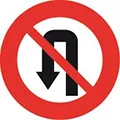
P.124a: No U-turn
No vehicle may make a U-turn, except priority vehicles under the Road Traffic Law. The sign does not ban turning left into another road.
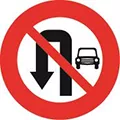
P.124b: No U-turn for cars
Cars and three-wheeled motorcycles must not make a U-turn, except priority vehicles under the Road Traffic Law.
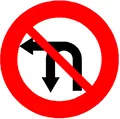
P.124c: No left turn or U-turn
Vehicles must not turn left or make a U-turn, except priority vehicles under the Road Traffic Law.
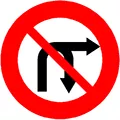
P.124d: No right turn or U-turn
Vehicles must not turn right or make a U-turn, except priority vehicles under the Road Traffic Law.
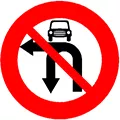
P.124e: No left turn or U-turn for cars
Cars must not turn left or make a U-turn, except priority vehicles under the Road Traffic Law.
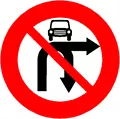
P.124f: No right turn or U-turn for cars
Cars must not turn right or make a U-turn, except priority vehicles under the Road Traffic Law.
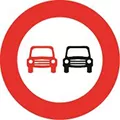
P.125: No overtaking
No motor vehicle may overtake another, including priority vehicles under the Road Traffic Law. Overtaking two-wheeled motorcycles and mopeds is allowed. The ban ends at sign DP.133 (End of no overtaking), or at sign DP.135 (End of all restrictions) where several bans end together.
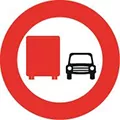
P.126: No overtaking by lorries
Lorries with a payload over 3,500 kg (3.5 tonnes, as stated on the roadworthiness and environmental inspection certificate), including priority vehicles, must not overtake other motor vehicles. Overtaking two-wheeled motorcycles and mopeds is allowed. The sign does not stop other motor vehicles overtaking each other or overtaking lorries.
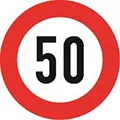
P.127: Maximum speed limit
No motor vehicle may exceed the speed shown on the sign (in km/h).
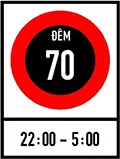
P.127a: Maximum speed limit at night
No motor vehicle may exceed the speed shown on the sign at night.
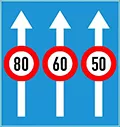
P.127b: Maximum speed per lane
Combined sign giving the maximum speed for each lane.
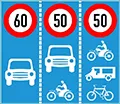
P.127c: Maximum speed per vehicle type and lane
Combined sign giving the maximum speed for each vehicle type in each lane.
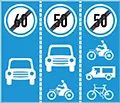
P.127d: End of maximum speed limit
End of the maximum speed limits set by the combined sign.
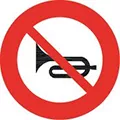
P.128: No horn
Motor vehicles must not sound their horn.
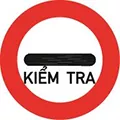
P.129: Checkpoint
A checkpoint: goods and passenger vehicles passing it must stop for inspection.
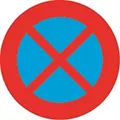
P.130: No stopping or parking
Motor vehicles must not stop or park on the side of the road where the sign stands.
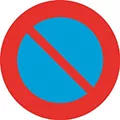
P.131a: No parking
Motor vehicles must not park on the side of the road where the sign stands, on any day.
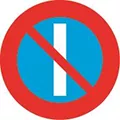
P.131b: No parking on odd dates
Motor vehicles must not park on the side of the road where the sign stands on odd dates.
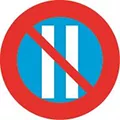
P.131c: No parking on even dates
Motor vehicles must not park on the side of the road where the sign stands on even dates.
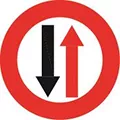
P.132: Give way to oncoming vehicles on narrow road
You must give way to motor vehicles coming the other way on narrow stretches of road and narrow bridges.
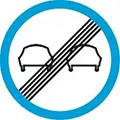
DP.133: End of no overtaking
Tells drivers that signs P.125 (No overtaking) and P.126 (No overtaking by lorries) no longer apply.
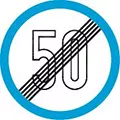
DP.134: End of maximum speed limit
Tells drivers that sign P.127 (Maximum speed limit) no longer applies.
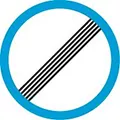
DP.135: End of all restrictions
Tells drivers that all the prohibitory signs placed earlier no longer apply.
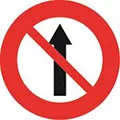
P.136: No straight ahead
No vehicle may go straight ahead at the junction.
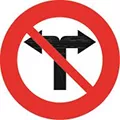
P.137: No left or right turn
No vehicle may turn left or right at the junction.
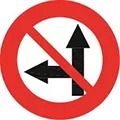
P.138: No straight ahead or left turn
No vehicle may go straight ahead or turn left at the junction.
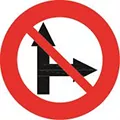
P.139: No straight ahead or right turn
No vehicle may go straight ahead or turn right at the junction.
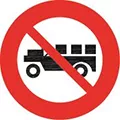
P.140: No farm trucks or similar vehicles
No farm trucks or similar vehicles of any kind.
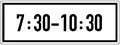
S.508a: Time-restricted ban
Supplementary plate S.508 (a, b) under a prohibitory sign shows the hours when vehicles are banned in the city.
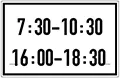
S.508b: Time-restricted ban
Supplementary plate S.508 (a, b) under a prohibitory sign shows the hours when vehicles are banned in the city.
Warning signs83 signs
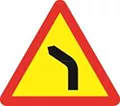
W.201a: Dangerous bend to the left
A dangerous bend ahead.
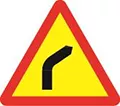
W.201b: Dangerous bend to the right
A dangerous bend ahead.
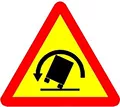
W.201c: Dangerous bend, risk of overturning to the right
A dangerous bend where vehicles may overturn to the right as the road curves left.
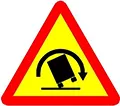
W.201d: Dangerous bend, risk of overturning to the left
A dangerous bend where vehicles may overturn to the left as the road curves right.
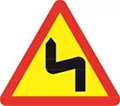
W.202a: Series of dangerous bends
A series of very dangerous bends ahead (three or more curves in alternating directions).
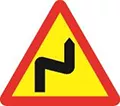
W.202b: Series of dangerous bends
A series of very dangerous bends ahead (three or more curves in alternating directions).
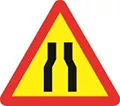
W.203a: Road narrows on both sides
The road ahead narrows suddenly on both sides.
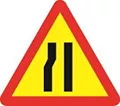
W.203b: Road narrows on the left
The road ahead narrows suddenly on the left.
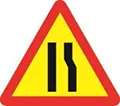
W.203c: Road narrows on the right
The road ahead narrows suddenly on the right.
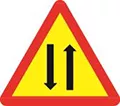
W.204: Two-way traffic
A stretch ahead where both directions must share a single lane, either temporarily (roadworks or an obstruction on one side, so traffic both ways uses the remaining side) or permanently. Watch for oncoming vehicles along this stretch.
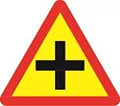
W.205a: Junction of equal roads
A junction ahead where the roads are of equal rank (no road has priority).
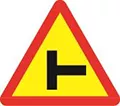
W.205b: Junction of equal roads
A junction ahead where the roads are of equal rank (no road has priority).
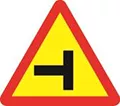
W.205c: Junction of equal roads
A junction ahead where the roads are of equal rank (no road has priority).
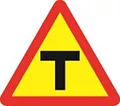
W.205d: Junction of equal roads
A junction ahead where the roads are of equal rank (no road has priority).
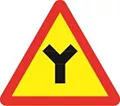
W.205e: Junction of equal roads
A junction ahead where the roads are of equal rank (no road has priority).
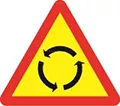
W.206: Roundabout ahead
A junction with a central island ahead; you must go round the roundabout.
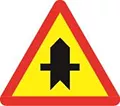
W.207a: Junction with a minor road
The priority road is approaching a junction with a non-priority road.
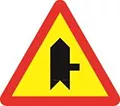
W.207b: Junction with a minor road
The priority road is approaching a junction with a non-priority road on the right.
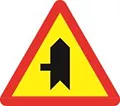
W.207c: Junction with a minor road
The priority road is approaching a junction with a non-priority road on the left.
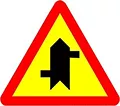
W.207d: Junction with a minor road
The priority road is approaching a junction with a non-priority road.
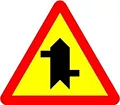
W.207e: Junction with a minor road
The priority road is approaching a junction with a non-priority road.
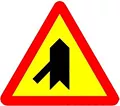
W.207f: Junction with a minor road
The priority road is approaching a junction with a non-priority road.
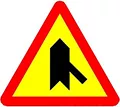
W.207g: Junction with a minor road
The priority road is approaching a junction with a non-priority road.
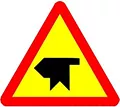
W.207h: Junction with a minor road
The priority road is approaching a junction with a non-priority road.
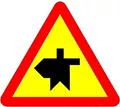
W.207i: Junction with a minor road
The priority road is approaching a junction with a non-priority road.
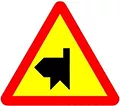
W.207k: Junction with a minor road
The priority road is approaching a junction with a non-priority road.
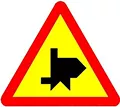
W.207l: Junction with a minor road
The priority road is approaching a junction with a non-priority road.
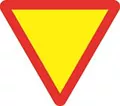
W.208: Junction with a priority road
The non-priority road is approaching a junction with a priority road.
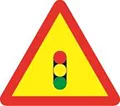
W.209: Traffic lights ahead
A junction controlled by traffic lights.
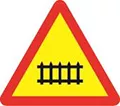
W.210: Level crossing with barriers
A level crossing with barriers ahead.
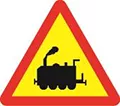
W.211a: Level crossing without barriers
A level crossing without barriers ahead.
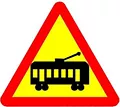
W.211b: Tramway crossing
A level crossing with a tramway ahead.
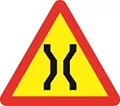
W.212: Narrow bridge
A narrow bridge ahead (carriageway 4.5 m wide or less).
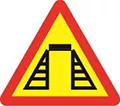
W.213: Temporary bridge
A temporary bridge ahead (built for temporary use).
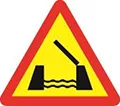
W.214: Swing or lifting bridge
A swing or lifting bridge ahead; vehicles must wait.
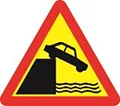
W.215a: Embankment or steep drop ahead
An embankment, a steep drop or a riverbank close to the road ahead.
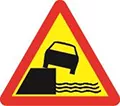
W.215b: Embankment or steep drop on the right
An embankment or a steep drop beside the road on the right ahead.
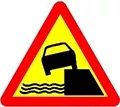
W.215c: Embankment or steep drop on the left
An embankment or a steep drop beside the road on the left ahead.
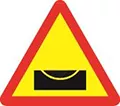
W.216a: Ford
A ford (causeway) across a river or stream ahead.

W.216b: Ford with flash flood risk
A ford (causeway) ahead that is often hit by flash floods.
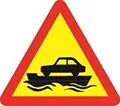
W.217: Ferry
A ferry terminal ahead.
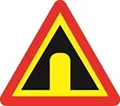
W.218: Archway
An archway over the road ahead.
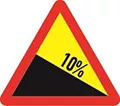
W.219: Steep downhill
A dangerous descent ahead. The figure on the sign is the gradient (%).
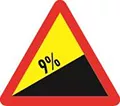
W.220: Steep uphill
A dangerous climb ahead. The figure on the sign is the gradient (%).
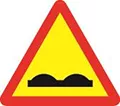
W.221a: Potholes and uneven road
A stretch with many potholes or an uneven surface.
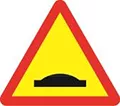
W.221b: Speed humps
A stretch with speed humps: slow down.
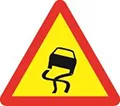
W.222a: Slippery road
A stretch ahead that may be slippery, especially in the rain.
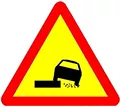
W.222b: Dangerous verge
The verge ahead is dangerous; keep off it.
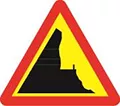
W.223a: Dangerous cliff
A dangerous cliff ahead on the left.
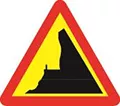
W.223b: Dangerous cliff
A dangerous cliff ahead on the right.
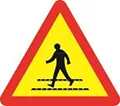
W.224: Pedestrian crossing ahead
A pedestrian crossing ahead.
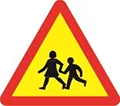
W.225: Children
A stretch where children often cross is near (nursery, school).
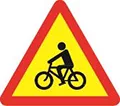
W.226: Cyclists crossing
A place where cyclists often cross from a side road is near.
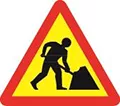
W.227: Roadworks
A construction site ahead.
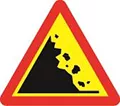
W.228a: Falling rocks
Risk of rocks falling onto the road from above on the left.
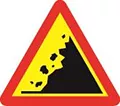
W.228b: Falling rocks
Risk of rocks falling onto the road from above on the right.
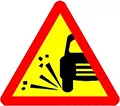
W.228c: Loose chippings
Risk of stones being thrown up by wheels.
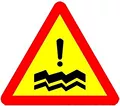
W.228d: Soft road
The road bed ahead is weak and may subside.
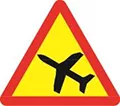
W.229: Low-flying aircraft
An area where aircraft take off and land at low height is near.
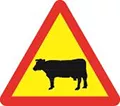
W.230: Livestock
An area where livestock often cross the road.
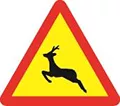
W.231: Wild animals crossing
An area where wild animals often cross the road.
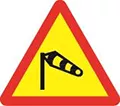
W.232: Side winds
An area with strong side winds.
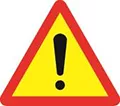
W.233: Other danger
A danger not covered by a specific sign.
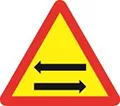
W.234: Junction with a two-way road
A junction with a two-way road ahead.
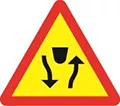
W.235: Dual carriageway
A dual carriageway ahead.
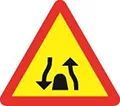
W.236: End of dual carriageway
The dual carriageway is about to end.
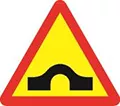
W.237: Hump bridge
A bridge with a very steep hump ahead.
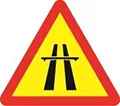
W.238: Motorway ahead
A motorway ahead.
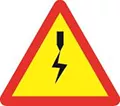
W.239: Overhead electric cables
Electric cables overhead.
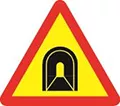
W.240: Tunnel ahead
A tunnel ahead.
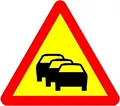
W.241: Traffic congestion
Traffic congestion ahead.

W.242a: Railway crossing the road at right angles
A crossing where a single railway track cuts across the road.
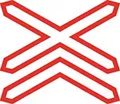
W.242b: Two railway tracks crossing the road
A place where two railway tracks cross the road.
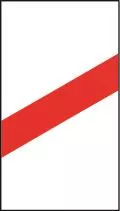
W.243a: Railway crossing the road at an angle
Placed 50 m from the nearest rail.
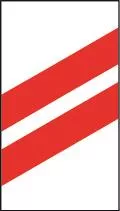
W.243b: Railway crossing the road at an angle
Placed 100 m from the nearest rail.
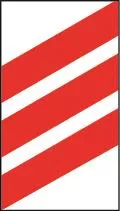
W.243c: Railway crossing the road at an angle
Placed 150 m from the nearest rail.
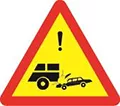
W.244: Accident black spot
Accidents often happen on the stretch ahead.
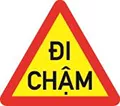
W.245a: Slow down
Drivers should reduce speed and go slowly, on the left.
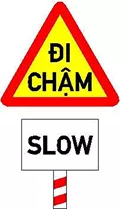
W.245b: Slow down
Drivers should reduce speed and go slowly, on the right.
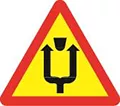
W.246a: Obstacle ahead: pass either side
An obstacle ahead; pass it on either side.
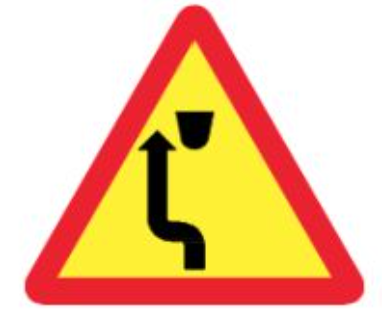
W.246b: Obstacle ahead: pass on the left
An obstacle ahead; pass it on the left.
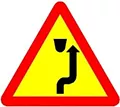
W.246c: Obstacle ahead: pass on the right
An obstacle ahead; pass it on the right.
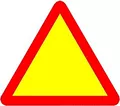
W.247: Parked vehicles ahead
Vehicles are parked ahead; take care and slow down.
Mandatory signs66 signs
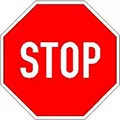
R.122: Stop
All motorised and non-motorised vehicles, including priority vehicles as prescribed, must stop. You may go only when a traffic controller or a light or flag signal allows it; otherwise only when the road is clear of any risk to road safety.

R.301a: Straight ahead only
Placed before a junction, sign R.301a applies to the junction beyond it, so turning right or left is banned. Placed after a junction (at the start of a street), it applies from the sign to the next junction. In that case turning left and U-turns are banned within its range; you may only turn into the gateways or alleys along the stretch between the junction where the sign stands and the next junction.

R.301b: Turn right only
Sign R.301b is placed after a junction to show the direction in which vehicles may cross it and to stop them driving the wrong way into a one-way street. Road users may only turn right or left at the junction in front of the sign.
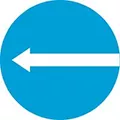
R.301c: Turn left only
Sign R.301c is placed after a junction to show the direction in which vehicles may cross it and to stop them driving the wrong way into a one-way street. Road users may only turn right or left at the junction in front of the sign.

R.301d: Turn right only
Sign R.301d is placed before a junction. Road users may only turn right or left at the junction beyond the sign.
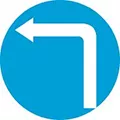
R.301e: Turn left only
Sign R.301e is placed before a junction. Road users may only turn right or left at the junction beyond the sign.

R.301f: Straight ahead or right turn only
Sign R.301f is placed before a junction. Road users may only go straight ahead or turn right at the junction beyond the sign.

R.301g: Straight ahead or left turn only
Sign R.301g is placed before a junction. Road users may only go straight ahead or turn left, and may make a U-turn to go back the other way.

R.301h: Turn left or right only
Sign R.301h is placed after a junction to prevent wrong-way driving into a one-way street. Road users may only turn left, make a U-turn or turn right at the junction in front of the sign.

R.302a: Direction to pass an obstacle
Vehicles must pass to the right of the obstacle.

R.302b: Direction to pass an obstacle
Vehicles must pass to the left of the obstacle.

R.302c: Direction to pass an obstacle
Vehicles may pass the obstacle on either the left or the right.

R.303: Roundabout
A junction with a central island: vehicles must go round the island, keeping it on their left.
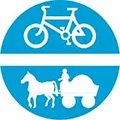
R.304: Route for non-motorised vehicles
A route reserved for non-motorised vehicles (including vehicles for disabled people) and pedestrians, who must use it. Motor vehicles, including priority vehicles under the Road Traffic Law, must not enter, except to cross it, and then only with complete safety for pedestrians.
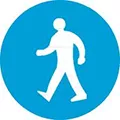
R.305: Pedestrians only
A route reserved for pedestrians. No vehicle, including priority vehicles under the Road Traffic Law, may enter, except to cross it, and then only with complete safety for pedestrians.
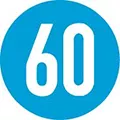
R.306: Minimum speed
Motor vehicles must travel no slower than the speed shown when traffic conditions are favourable and safe. Vehicles whose maker-rated top speed is below the figure shown must not use this road.
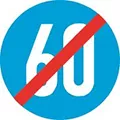
R.307: End of minimum speed
End of the minimum speed stretch. From this sign vehicles may travel slower than the figure shown, but must not obstruct others.

R.308a: Route crossed by a flyover
Go straight ahead or turn left on the flyover.

R.308b: Route crossed by a flyover
Go straight ahead or turn right on the flyover.

R.309: Sound horn
Drivers must sound their horn along this stretch.
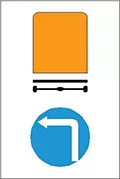
R.310a: Route for vehicles carrying dangerous goods
Vehicles carrying dangerous goods must turn left.
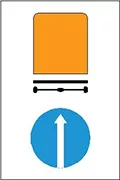
R.310b: Route for vehicles carrying dangerous goods
Vehicles carrying dangerous goods may only go straight ahead.
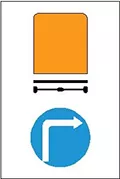
R.310c: Route for vehicles carrying dangerous goods
Vehicles carrying dangerous goods must turn right.
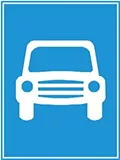
R.403a: Road for cars
A road reserved for cars, lorries and coaches of all kinds.
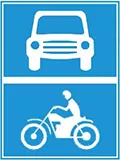
R.403b: Road for cars and motorcycles
A road reserved for cars, lorries, coaches and motorcycles.
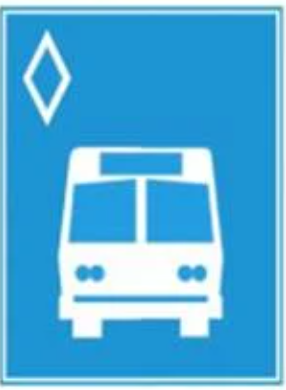
R.403c: Road for buses
Marks the start of a road for buses.
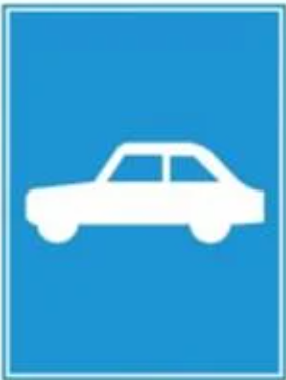
R.403d: Road for passenger cars
Marks the start of a road for passenger cars.
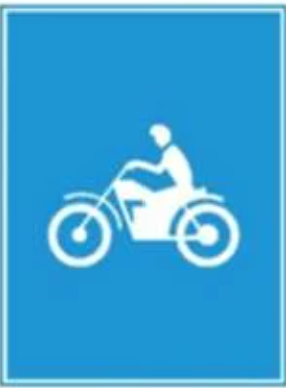
R.403e: Road for motorcycles
Marks the start of a road for motorcycles.
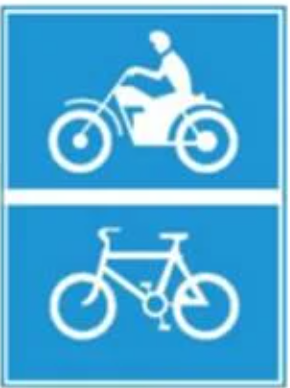
R.403f: Road for motorcycles and bicycles
Marks the start of a road for motorcycles (including mopeds) and bicycles (including other non-motorised vehicles).
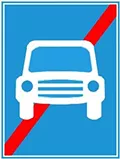
R.404a: End of road for cars
End of the road reserved for cars, lorries and coaches.
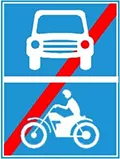
R.404b: End of road for cars and motorcycles
End of the road reserved for cars, lorries, coaches and motorcycles.
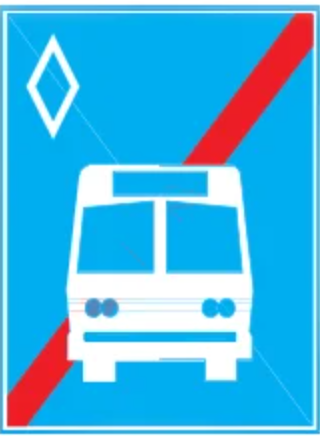
R.404c: End of road for buses
End of the road for buses.
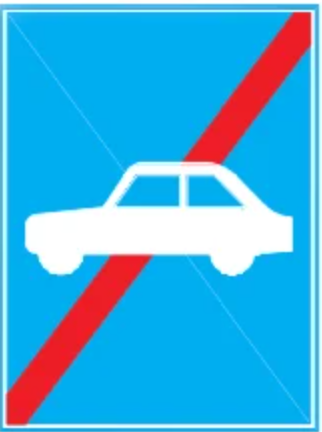
R.404d: End of road for passenger cars
End of the road for passenger cars.
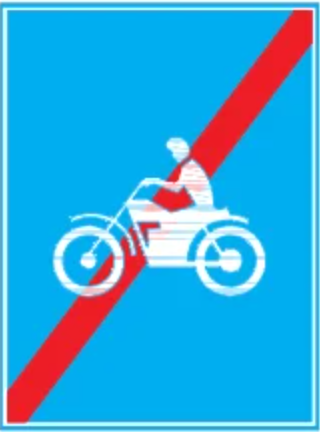
R.404e: End of road for motorcycles
End of the road for motorcycles.
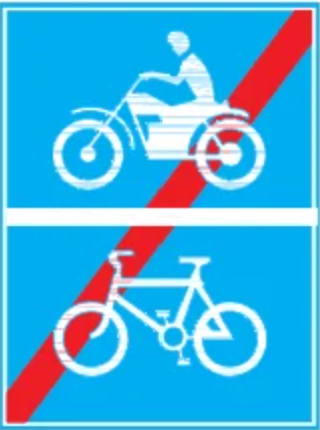
R.404f: End of road for motorcycles and bicycles
End of the road for motorcycles (including mopeds) and bicycles.
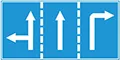
R.411: Mandatory direction in each lane
Tells road users how many lanes the road has and which way each lane must go, matching the road markings.
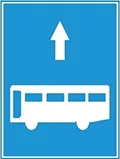
R.412a: Coach lane
A lane reserved for coaches (including buses).
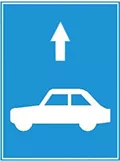
R.412b: Passenger car lane
A lane reserved for passenger cars.
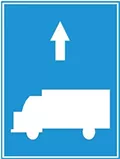
R.412c: Lorry lane
A lane reserved for lorries.
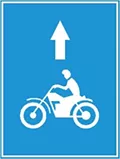
R.412d: Motorcycle lane
A lane reserved for motorcycles and mopeds.
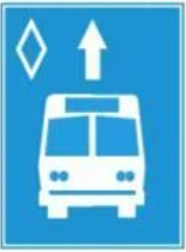
R.412e: Bus lane
A lane reserved for buses.
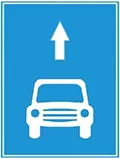
R.412f: Car lane
A lane reserved for cars, lorries and coaches of all kinds.
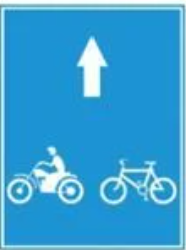
R.412g: Motorcycle and bicycle lane
A lane reserved for motorcycles (including mopeds) and bicycles (including other non-motorised vehicles).
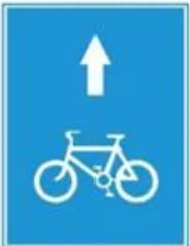
R.412h: Cycle lane
A lane reserved for bicycles (including other non-motorised vehicles).
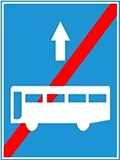
R.413i: End of coach lane
End of the lane for coaches.
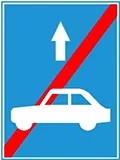
R.413j: End of passenger car lane
End of the lane for passenger cars.
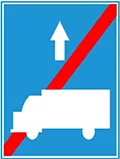
R.413k: End of lorry lane
End of the lane for lorries.
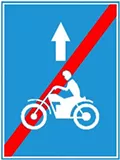
R.413l: End of motorcycle lane
End of the lane for motorcycles.
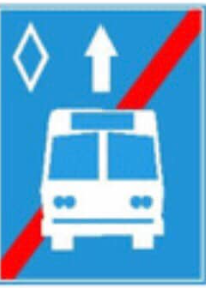
R.413m: End of bus lane
End of the lane reserved for buses.
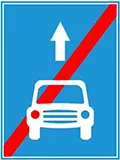
R.413n: End of car lane
End of the lane for cars, lorries and coaches.
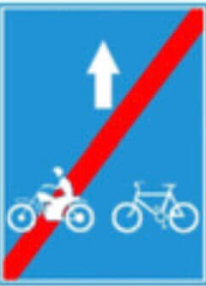
R.413o: End of motorcycle and bicycle lane
End of the lane for motorcycles and bicycles.
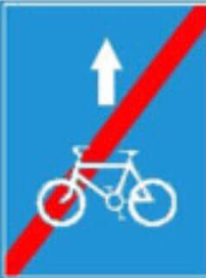
R.413p: End of cycle lane
End of the lane for bicycles.
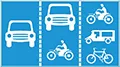
R.415a: Lanes by vehicle type
Shows the number of lanes and which vehicles may use each one.
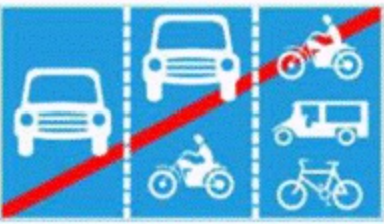
R.415b: End of lanes by vehicle type
Marks the end of the stretch where each lane is assigned to particular vehicles.

R.420: Start of built-up area
Marks the start of a built-up area. It tells road users where the traffic rules for built-up areas begin to apply.
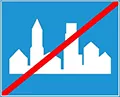
R.421: End of built-up area
Marks the end of a built-up area. It tells road users that the traffic rules for built-up areas no longer apply.
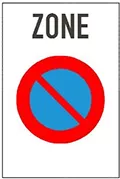
R.E,9a: No parking zone
No parking on every road within the zone (it applies to the whole zone).
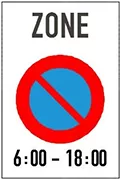
R.E,9b: Time-limited no parking zone
No parking at the hours shown on every road within the zone (it applies to the whole zone).
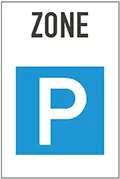
R.E,9c: Parking zone
Parking is allowed on every road within the zone (it applies to the whole zone).
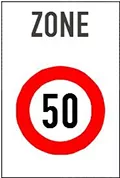
R.E,9d: Zone speed limit
Sets a maximum speed limit on every road within the zone (it applies to the whole zone).
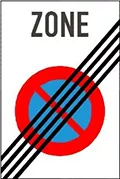
R.E,10a: End of no parking zone
Marks the end of the no parking ban on every road within the zone (it applies to the whole zone).
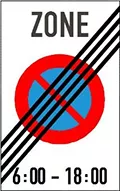
R.E,10b: End of time-limited no parking zone
Marks the end of the time-limited no parking ban on every road within the zone (it applies to the whole zone).
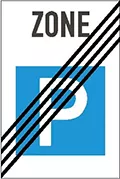
R.E,10c: End of parking zone
Marks the end of the parking zone on every road within the zone (it applies to the whole zone).
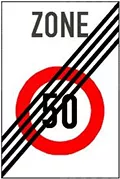
R.E,10d: End of zone speed limit
Marks the end of the maximum speed limit on every road within the zone (it applies to the whole zone).
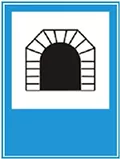
R.E,11a: Tunnel
Marks a stretch through a tunnel where special traffic rules apply.
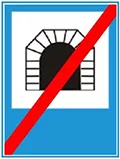
R.E,11b: End of tunnel
Marks the end of the tunnel; the special traffic rules no longer apply.
Information signs30 signs

I.401: Start of priority road
Vehicles on the main road have priority at junctions. Vehicles joining from side roads must stop and give way to them, except priority vehicles under the Road Traffic Law.

I.402: End of priority road
The priority road has ended. From here keep to the speed limit and give priority to the right at junctions.

I.405a: No through road
The road on the right is a no through road. Placed on the main road before the junction that leads into it.

I.405b: No through road
The road on the left is a no through road. Placed on the main road before the junction that leads into it.
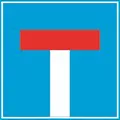
I.405c: No through road
No through road: there is no way out ahead. Placed 300 m to 500 m before the dead end, and repeated every 100 m.
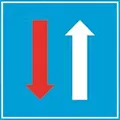
I.406: Priority over oncoming vehicles on narrow road
You have priority over oncoming vehicles on the narrow stretch. If an oncoming vehicle is already inside the narrow stretch, however, you must give way too.
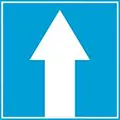
I.407a: One-way road
Vehicles may only travel in the direction of the arrow; turning back is banned (except priority vehicles under the Road Traffic Law).

I.407b: One-way road
Vehicles may only travel in the direction of the arrow; turning back is banned (except priority vehicles under the Road Traffic Law).

I.407c: One-way road
Vehicles may only travel in the direction of the arrow; turning back is banned (except priority vehicles under the Road Traffic Law).
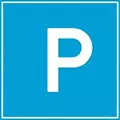
I.408: Parking
Shows where parking is allowed: car parks, vehicle stations and so on.
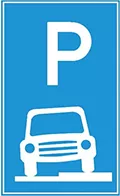
I.408a: Parking partly on the pavement
Shows where vehicles may park partly on a wide pavement. At least half of the vehicle must be on the pavement.

I.409: U-turn point
A place where U-turns are allowed.
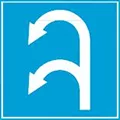
I.410: U-turn area
An area where U-turns are allowed.
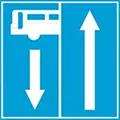
I.413a: Coach lane on the road ahead
The road has a lane reserved for coaches running in the opposite direction. Placed at T-junctions and crossroads at the start of a one-way road where coaches may travel against the flow.
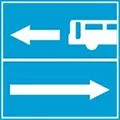
I.413b: Turn onto a road with a coach lane
At a T-junction or crossroads, turning right or left leads onto a road with a lane for coaches.
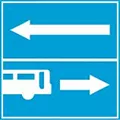
I.413c: Turn onto a road with a coach lane
At a T-junction or crossroads, turning right or left leads onto a road with a lane for coaches.
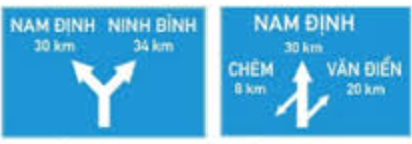
I.414(a,b): Direction sign
Gives directions to places and residential areas. Sign I.414 (a, b) is placed at junctions where only one place or residential area needs signing in that direction.
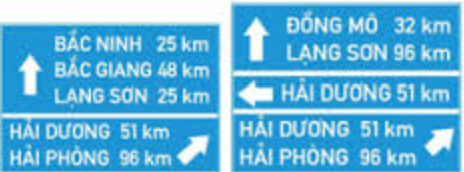
I.414(c,d): Direction sign
Gives directions to places and residential areas. Sign I.414 (c, d) is placed at junctions where two or more places or residential areas need to be shown on the sign.
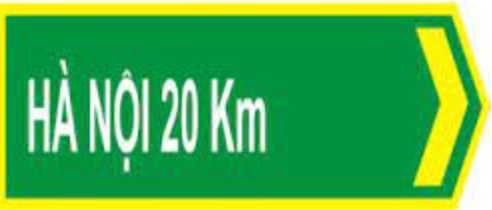
I.415: Direction arrow
Used in built-up areas or at junctions to show the way to the next nearby place.

I.418: Alternative route where turns are banned
Shows the alternative route to take where left or right turns are banned.
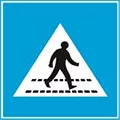
I.423a: Pedestrian crossing
Shows the position of a pedestrian crossing.
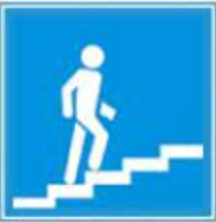
I.424a: Pedestrian footbridge
Directs pedestrians to use the footbridge.
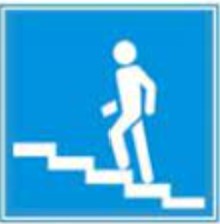
I.424b: Pedestrian footbridge
Directs pedestrians to use the footbridge.
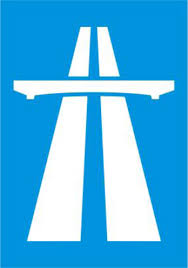
I.437: Motorway
Marks the start of a motorway.
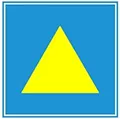
I.443: Vehicle towing a trailer
Shows that the vehicle is towing a trailer or another vehicle. Fitted on the cab roof of the towing vehicle.
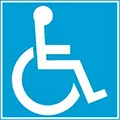
I.446: Disabled parking
Shows the position of dedicated facilities for disabled people.

I.447a: Flyover interchange
Placed before the flyover. At the interchange vehicles may go straight ahead, or follow the diagram to turn left or right.
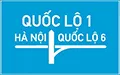
I.447b: Flyover interchange
Placed before the flyover. At the interchange vehicles may go straight ahead, or follow the diagram to turn left or right.
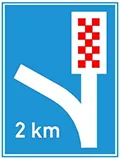
I.448: Escape lane
A set of three pairs of signs at 2 km, 1 km and 300 m telling road users where the escape lane is and how far away.
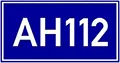
I.449: Road name sign
Gives the road name on routes leading out of the city.
Supplementary signs19 signs
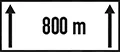
S.501: Extent of the sign
Placed under warning, prohibitory or restriction signs. Gives the length of the dangerous stretch, or of the stretch where the ban or restriction applies.
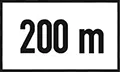
S.502: Distance to the signed feature
Placed under warning, prohibitory or restriction, mandatory and information signs. Gives the actual distance from the sign to the feature ahead that it refers to.
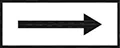
S.503a: Direction the sign applies
Plates S.503 (a, b, c) are placed under prohibitory and mandatory signs to show that the sign applies at right angles to the direction of travel.
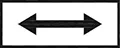
S.503b: Direction the sign applies
Plates S.503 (a, b, c) are placed under prohibitory and mandatory signs to show that the sign applies at right angles to the direction of travel. Of these, plate S.503b shows that it applies in both directions (left and right).
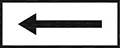
S.503c: Direction the sign applies
Plates S.503 (a, b, c) are placed under prohibitory and mandatory signs to show that the sign applies at right angles to the direction of travel.
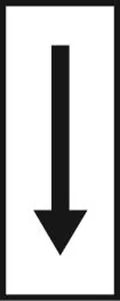
S.503d: Direction the sign applies
Plates S.503 (d, e, f) are placed under signs P.124 (a, b, c, d, e, f), P.130 (No stopping or parking) and P.131 (a, b, c) (No parking) to show that the sign applies parallel to the direction of travel.
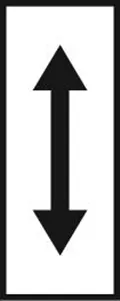
S.503e: Direction the sign applies
Plates S.503 (d, e, f) are placed under signs P.124 (a, b, c, d, e, f), P.130 (No stopping or parking) and P.131 (a, b, c) (No parking) to show that the sign applies parallel to the direction of travel. Of these, plate S.503e shows that it applies both ways (ahead and behind) from the sign repeating the no stopping and no parking ban.

S.503f: Direction the sign applies
Plates S.503 (d, e, f) are placed under signs P.124 (a, b, c, d, e, f), P.130 (No stopping or parking) and P.131 (a, b, c) (No parking) to show that the sign applies parallel to the direction of travel.

S.504: Lane
Supplementary plate showing the lane to which the main sign applies.
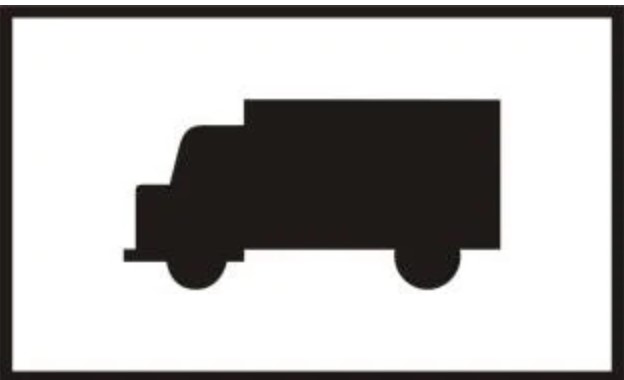
S.505a: Vehicle type
Plate S.505a is placed under prohibitory, mandatory or information signs to show which type of vehicle the sign applies to.
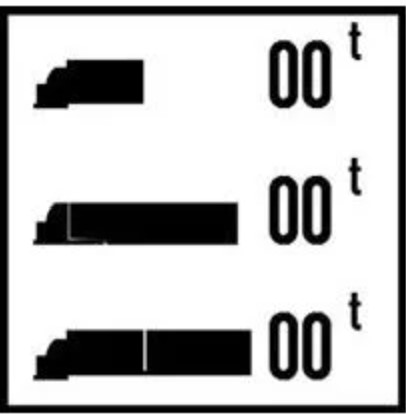
S.505b: Vehicle type
Plate S.505b is placed under sign P.106a (No lorries) to show which lorries the sign applies to and the permitted gross weight for each type (unladen weight plus permitted payload), regardless of the number of axles.

S.506a: Direction of the priority road
Shows the direction of the priority road at a junction (turning left).

S.506b: Direction of the priority road
Shows the direction of the priority road at a junction (turning right).

S.507: Bend direction
Sign S.507 is used on its own to warn road users of a dangerous bend and to show which way it turns.
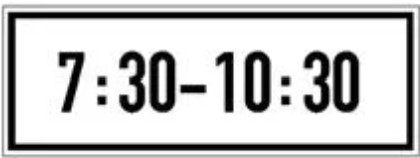
S.508a: Time period
Placed under a prohibitory or mandatory sign to set the hours during which that sign applies.
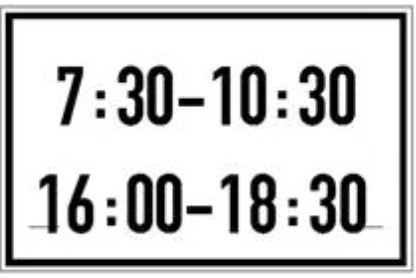
S.508b: Time period
Placed under a prohibitory or mandatory sign to set the hours during which that sign applies.
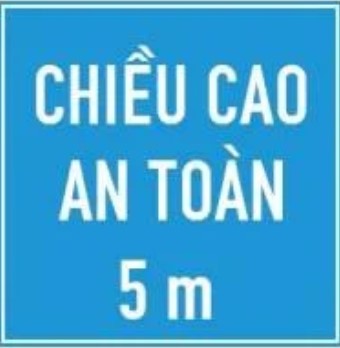
S.509a: Explanation of the main sign
To add to sign W.239 (Overhead electric cables), plate S.509a (Safe height) may be placed under it, giving the height at which vehicles can pass safely.

S.509b: Explanation of the main sign
Where needed, plate S.509b (No parking) may be added under signs P.130 and P.131 (a, b, c) to make the message clear.
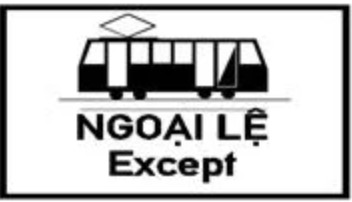
S.H,6: Exception
Shows cases where a prohibitory or restriction sign does not apply to a particular group of road users: plate S.H,6 names that group together with the word “Except”.
Looked it up? Keep practising
FAQ
See allThe bank has 600 questions. Do I have to learn them all?
The bank has 600 questions in 6 chapters. Each car class draws its paper from the 350 questions in that class's scope, not the whole bank. The app filters to the right scope for the class you choose, so revising for your own class is enough.
How many questions are in the theory test, and how long is it?
It depends on the class. Class A1: 25 questions in 19 minutes, with at least 21 correct. Class B: 30 questions in 20 minutes, with at least 27 correct. Class C1: 35 questions in 22 minutes, with at least 32 correct. Other classes have their own numbers — the figures for each class appear in the "Quick mock test" block when you switch class.
What is a critical question? Do I fail if I get one wrong?
Every paper includes a critical question drawn from the group of 60. Get one critical question wrong and you fail the whole paper, however many of the others are right. So learn this group separately, until you are certain, rather than mixed in with the rest.
Are memory tricks enough to pass?
Tricks help you remember the easily confused questions, but they do not replace understanding. Papers are drawn at random from the whole bank, so if you only know the trick, a question worded differently costs you a mark. The right way: understand first, then use tricks to lock in the questions you tend to forget.
There are so many road signs. Is there a quick way to remember them?
Remember them by GROUP, not one by one: prohibitory signs are white with a red border, warning signs are yellow triangles, mandatory signs are blue circles, information signs are blue squares. Once you know the rules of shape and colour you can place an unfamiliar sign in its group, and only the specific meaning is left to learn.
I am just starting. What order should I learn in?
Theory first, and within theory take the critical questions separately and learn them until you are certain. Only then practise papers to get used to the time pressure. Doing papers before you know the theory only feels like progress: you remember the answers to each paper, not the questions.